
Access to Meilahti Emergency Department is via the Bridge Hospital entrance (Paciuksenkatu 3) starting January 8, 2024
5.1.2024 05:55:00 EET | HUS | Press release
The access route for patients arriving independently to the Meilahti Emergency Department changes on January 8, 2024, at 7:15 am. Access to the emergency department is only via the Bridge Hospital entrance (Paciuksenkatu 3). It will no longer be possible to enter the emergency department via the Haartman Hospital entrance. This applies to all patients arriving independently with or without a doctor's referral.
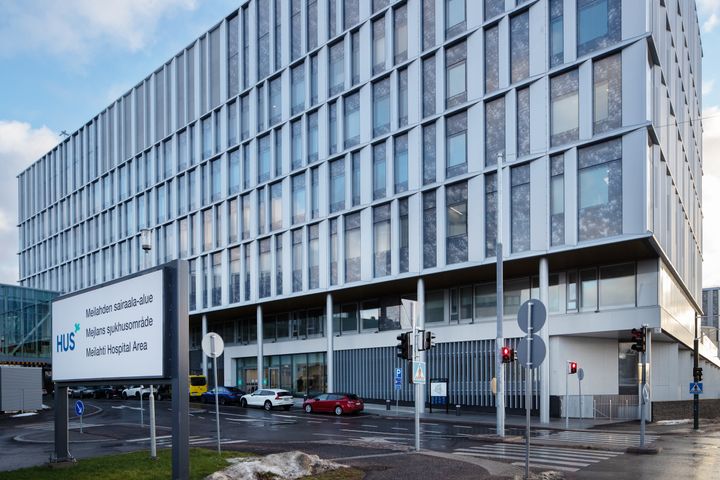
Registration and assessment of treatment needs will take place in the emergency department's entrance lobby from where patients are directed to treatment.
The entrances for patients arriving by ambulance will not change.
The Meilahti Emergency Department treats primary healthcare and specialized healthcare patients.
For primary healthcare, the Meilahti Emergency Department mainly serves residents over the age of 16 from southern, central and western Helsinki who need urgent care when their local health center is closed. Service hours are 4:00–10:00 p.m. on weekdays, and 8:00a.m.–10:00p.m. on weekends and public holidays.
For specialized healthcare, the Meilahti Emergency Department serves the entire HUS region as the 24/7 emergency department for specialized healthcare where patients usually arrive by ambulance or doctor’s referral.
Before seeking medical attention at the emergency department
We recommend calling the Medical Helpline 116 117. The Medical Helpline will direct you to the correct place of care and give you care instructions as necessary. In an emergency, always call 112 directly.
Contacts
Timo Suonsyrjä
Head Physician, Meilahti Emergency Department
timo.suonsyrja@hus.fi
050 427 0829
Images

About HUS
HUS Helsinki University Hospital is the biggest provider of specialized healthcare in Finland. Our high expertise is internationally recognized and accredited. As a university hospital, we are on the cutting edge of developing and evaluating our treatment methods and activities.
HUS treats almost 700,000 patients every year. Our nearly 27,000 professionals work to provide the best possible care for our patients. We are responsible for organizing specialized health care in the Uusimaa region. The treatment of many rare and difficult diseases in Finland has been centralized to HUS as well.
HUS – Leading healthcare
Alternative languages
Subscribe to releases from HUS
Subscribe to all the latest releases from HUS by registering your e-mail address below. You can unsubscribe at any time.
Latest releases from HUS
HUS övergår till att skicka patientbrev i första hand elektroniskt21.10.2026 07:30:00 EEST | Pressmeddelande
HUS tar Suomi.fi-meddelanden i användning 26.10.2026. Efter det skickas patientbrev till myndiga personer till Maisa, Suomi.fi-meddelanden eller OmaPosti. Pappersbrev får ännu de patienter som inte har tagit e-tjänster i användning.
HUS siirtyy lähettämään potilaskirjeet ensisijaisesti sähköisesti21.10.2026 07:30:00 EEST | Tiedote
HUS ottaa Suomi.fi-viestit käyttöön 26.10.2026. Tämän jälkeen täysi-ikäisten potilaskirjeet toimitetaan Maisaan, Suomi.fi-viesteihin tai OmaPostiin. Paperikirjeen saavat edelleen ne potilaat, jotka eivät ole ottaneet sähköisiä palveluja käyttöön.
HUS to primarily deliver patient letters electronically21.10.2026 07:30:00 EEST | Press release
HUS will start using Suomi.fi messages on October 26, 2026. From that date onward, letters to patients over the age of 18 are delivered to Maisa, Suomi.fi messages, or OmaPosti. Patients who have not enabled electronic services will continue to receive paper letters.
Sammanslutningens styrelse valde HUS nya leverantör av bilddiagnostisk lösning5.10.2026 13:16:05 EEST | Pressmeddelande
På sitt möte valde sammanslutningens styrelse HUS nya leverantör av bilddiagnostisk lösning och behandlade verksamheten och ekonomin för januari–augusti 2026.
Yhtymähallitus valitsi HUSin kuvantamisratkaisun toimittajan5.10.2026 13:16:05 EEST | Tiedote
Yhtymähallitus valitsi kokouksessaan HUSin kuvantamisratkaisun toimittajan sekä käsitteli tammi−elokuun 2026 toimintaa ja taloutta.
In our pressroom you can read all our latest releases, find our press contacts, images, documents and other relevant information about us.
Visit our pressroom