
Drug sensitivity testing helps target new pharmacotherapy for leukemia
29.10.2024 08:00:00 EET | HUS | Press release
Drug sensitivity testing on leukemia cells can predict how patients with acute myeloid leukemia (AML) will respond to a new combination therapy. This approach allows treatments to be tailored to those who are most likely to benefit.
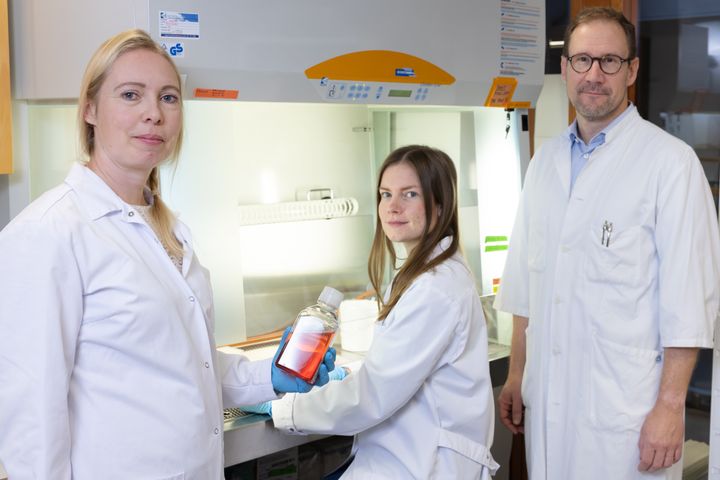
Acute myeloid leukemia (AML) is the most common form of acute leukemia in adults. Several new targeted therapies have been developed for leukemia. However, the challenge is identifying the patients who would benefit from these treatments.
A Finnish study sponsored by HUS, published recently in the prestigious scientific journal Blood, examined if drug sensitivity testing of leukemia cells in the laboratory can be used to predict whether a patient with AML benefits from a new combination of venetoclax and azacitidine. The study showed that the sensitivity of the patient’s leukemia cells to venetoclax predicts both a good treatment response and longer survival.
"The method is an effective tool for personalizing treatment and helps identify patients who would benefit from a novel targeted therapy. It is especially useful for patients whose AML has relapsed after previous treatment. The results are promising, as selecting patients with the highest likelihood of response could reduce the adverse effects and costs associated with ineffective treatment,” says Mika Kontro, a hematologist at HUS and representative of the Institute for Molecular Medicine Finland (FIMM) at the University of Helsinki, who led the study.
Study accelerated the access to new leukamia drug
A total of 104 leukemia patients from all Finnish university hospitals participated in the groundbreaking study carried out by the Finnish AML group. In the drug sensitivity testing used in the study, leukemia cells collected from the patients’ bone marrow were exposed to several different drugs in the laboratory. The testing helped determine how the laboratory-defined drug sensitivity to venetoclax would predict the patient’s actual treatment response. Towards the end of the study, the method was used as a diagnostic test to support the decision to start the novel treatment.
"The study made it possible to have a new promising venetoclax medication available for the treatment of leukemia patients in Finland three years earlier than would otherwise have been possible," Kontro says.
Results readily available to guide treatment selection
The study showed that drug sensitivity testing can be completed quickly so that the results are available for selecting the patient’s medication.
Efficient logistics were required for the fast delivery of samples from five university hospitals to the research laboratory. Within just three days of sampling, the FIMM High Throughput Biomedicine unit provided doctors drug sensitivity data on leukemia cells, supporting timely treatment decisions.
"It’s also possible to use the method for other drugs, but more extensive use requires further examination," Kontro says.
In a university hospital, research is part of the treatment: we continuously evaluate and develop care based on scientific research evidence and patient experience. At HUS, we conduct close research collaboration with the Faculty of Medicine at the University of Helsinki. We publish approximately 2,400 peer-reviewed research articles) annually, which we highlight in our newsfeed.
Contacts
Mika Kontro
hematologist, principal investigator
050 428 7052
mika.kontro@helsinki.fi
About HUS
HUS Helsinki University Hospital is the biggest provider of specialized healthcare in Finland. Our high expertise is internationally recognized and accredited. As a university hospital, we are on the cutting edge of developing and evaluating our treatment methods and activities.
HUS treats almost 700,000 patients every year. Our more than 27,000 professionals work to provide the best possible care for our patients. We are responsible for organizing specialized health care in the Uusimaa region. The treatment of many rare and difficult diseases in Finland has been centralized to HUS as well.
HUS – Leading healthcare
The HUS media service is available for the media Mon–Thu 10:00 a.m.–4:00 p.m. and Fri 10:00 a.m.–3:00 p.m., tel. 050 427 2875, or via e-mail: viestinta@hus.fi.
hus.fi/en
Alternative languages
Subscribe to releases from HUS
Subscribe to all the latest releases from HUS by registering your e-mail address below. You can unsubscribe at any time.
Latest releases from HUS
Sammanslutningens styrelse valde HUS nya leverantör av bilddiagnostisk lösning5.10.2026 13:16:05 EEST | Pressmeddelande
På sitt möte valde sammanslutningens styrelse HUS nya leverantör av bilddiagnostisk lösning och behandlade verksamheten och ekonomin för januari–augusti 2026.
Yhtymähallitus valitsi HUSin kuvantamisratkaisun toimittajan5.10.2026 13:16:05 EEST | Tiedote
Yhtymähallitus valitsi kokouksessaan HUSin kuvantamisratkaisun toimittajan sekä käsitteli tammi−elokuun 2026 toimintaa ja taloutta.
Studie gav ny kunskap om immunförsvaret vid leukemi29.9.2026 08:26:54 EEST | Pressmeddelande
Forskare vid HUS Cancercentrum och Helsingfors universitet utredde hur immunsystemet hos patienter med akut myeloisk leukemi reagerade på experimentell immunterapi. Förändringar som hänför sig till terapiresponsen visade sig i andra immunceller än förväntat baserat på tidigare studier.
Tutkimus toi uutta tietoa leukemian immuunipuolustuksesta29.9.2026 08:26:54 EEST | Tiedote
HUSin Syöpäkeskuksen ja Helsingin yliopiston tutkijat selvittivät, miten akuuttia myelooista leukemiaa sairastavien potilaiden immuunijärjestelmä reagoi kokeelliseen immunoterapiaan. Hoitovasteeseen liittyvät muutokset näkyivät eri immuunisoluissa kuin aiempien tutkimusten perusteella olisi voitu odottaa.
Study provides new insights into the immune response in leukemia29.9.2026 08:26:54 EEST | Press release
Researchers at HUS Comprehensive Cancer Center and the University of Helsinki investigated how the immune systems of patients with acute myeloid leukemia (AML) respond to experimental immunotherapy. The study found that changes associated with treatment response were observed in different immune cell types than would have been expected based on previous research.
In our pressroom you can read all our latest releases, find our press contacts, images, documents and other relevant information about us.
Visit our pressroom